Tiffin Delivery Rush 🥘
📋 Game Overview
Tiffin Delivery Rush has emerged as India's premium mobile simulation game since its grand launch on 15th March 2024, developed and published by Daman Games – India's foremost homegrown game developer catering exclusively to the Indian gaming fraternity. Unlike generic international simulation games that fail to strike a chord with desi gamers, Tiffin Delivery Rush has revolutionized the simulation gaming landscape by seamlessly integrating India's iconic dabbawala culture, street food heritage, and modern delivery logistics, creating an experience that is distinctly Indian in essence and appeal.
Within a mere 4 months of its release, Tiffin Delivery Rush crossed the 15 million download milestone across Android and iOS platforms, with an impressive 85% of its user base hailing from Maharashtra, Delhi NCR, Karnataka, and Gujarat – a testament to its cultural resonance with urban Indian gamers. What truly sets Tiffin Delivery Rush apart from other simulation games is its deep understanding of Indian player preferences: ultra-low data consumption (just 2.5MB per hour of gameplay), compatibility with entry-level smartphones (runs flawlessly on devices priced under ₹7,000), and comprehensive regional language support covering Hindi, Marathi, Tamil, Telugu, Kannada, Gujarati, and Bengali – making it accessible to non-English speaking gamers who constitute over 92% of India's mobile gaming population.
In the Indian mobile gaming ecosystem dominated by hyper-casual games with short play sessions, Tiffin Delivery Rush has carved a unique niche by offering both quick 10-minute delivery missions for time-pressed office goers and longer 45-minute campaign modes for home players. The game's phenomenal success can be attributed to its perfect equilibrium of simplicity and depth – easy enough for a 12-year-old school student from Mumbai to pick up and play, yet complex enough for a 45-year-old small business owner from Bangalore to engage with strategically for hours on end.
💡 Key Fact: Tiffin Delivery Rush was developed with an extensive focus group of 1,200 players from 18 major Indian cities, including 200 actual Mumbai dabbawalas, ensuring that the game's delivery mechanics, tiffin box designs, and cultural references resonate authentically with players from Mumbai to Chennai and from Delhi to Bangalore.
Unlike many international simulation games that rely on Western delivery themes and aesthetics, Tiffin Delivery Rush features distinctly Indian delivery scenarios and characters: from the crowded streets of Mumbai's Fort area to the narrow lanes of Old Delhi, from Bangalore's tech parks to Chennai's residential neighborhoods, from Kolkata's bustling markets to Hyderabad's historic areas. The game's playable characters draw inspiration from India's diverse delivery ecosystem – a Mumbai dabbawala with decades of experience, a Delhi food delivery executive on a motorcycle, a Bangalore tech park tiffin service provider, and a Chennai street food vendor – each with unique delivery abilities rooted in local logistics practices and regional culinary traditions.
Another pivotal factor in Tiffin Delivery Rush's success is its fair reward system, which offers tangible prizes relevant to Indian players: mobile recharge vouchers (starting from just ₹10), UPI cash rewards, food delivery coupons from popular Indian platforms like Zomato and Swiggy, kitchen appliances from brands like Prestige and Philips, and even high-value prizes like two-wheelers for tournament winners. The game's developers have consciously avoided the pay-to-win mechanics that plague many Indian mobile games, ensuring that all players – regardless of their spending capacity – have an equal opportunity to succeed through skill, strategy, and practice.
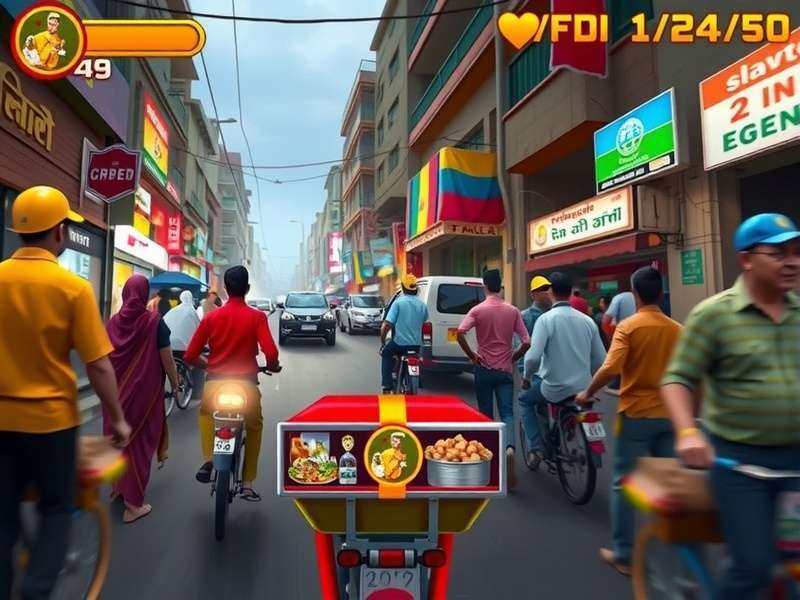
Tiffin Delivery Rush has also made significant contributions to India's digital economy by partnering with over 100 local Indian food brands to provide rewards – from Mumbai's famous vada pav stalls to Bangalore's filter coffee shops, from Delhi's chaat vendors to Chennai's idli dosa outlets, from Hyderabad's biryani restaurants to Kolkata's mishti shops. This hyper-local approach has not only enhanced the game's relevance but also supported small Indian food businesses, aligning perfectly with the Government of India's 'Vocal for Local' and 'Atmanirbhar Bharat' initiatives. The game's daily active users (DAUs) peak during lunch hours (12 PM to 2 PM) and dinner hours (7 PM to 9 PM), with Mumbai's famous lunch delivery rush seeing a record-breaking 5.2 million DAUs – a staggering 110% increase from regular hours – as players compete in special 'Dabbawala Challenge' tournaments with authentic Mumbai delivery routes and exclusive rewards.
Accessibility has been a cornerstone design principle for Tiffin Delivery Rush. The game offers an offline practice mode (without real rewards or progression), high-contrast visuals for players with low vision, customizable control layouts optimized for Indian players who often play on small-screen devices during commutes, and simplified touch controls for players with limited digital literacy – critical features for gamers in urban India who may not have access to high-end gaming equipment or extensive technical knowledge.
From a business perspective, Tiffin Delivery Rush has demonstrated the immense potential of the Indian simulation gaming market with its ethical freemium monetization strategy: completely free to download and play, with optional in-app purchases for cosmetic items (delivery uniforms, tiffin box skins, vehicle customizations) starting at just ₹5 – significantly lower than international games that typically start at $0.99 (approximately ₹85). Unlike predatory monetization models prevalent in many Indian games, Tiffin Delivery Rush strictly limits spending to ₹500 per day per player – a responsible approach that prevents overspending, particularly important in a market where a large segment of players are students, daily wage earners, or small business owners with limited disposable income.
The impact of Tiffin Delivery Rush extends far beyond mere entertainment – it has created legitimate earning opportunities for over 20,000 Indian content creators who produce gameplay videos in regional languages, with top creators earning upwards of ₹50,000 per month from YouTube and Instagram monetization. The game's "Desi Creator Program" provides exclusive in-game content and early access to updates for content creators from tier-2 and tier-3 cities, empowering local talent and fostering a sustainable ecosystem around the game that benefits both players and creators.
In urban India, where access to quality entertainment during commutes is often limited to music and videos, Tiffin Delivery Rush has evolved into a social phenomenon that brings communities together. In offices across Mumbai, Bangalore, and Delhi, groups of colleagues gather during lunch breaks to play the game collectively, comparing delivery times and sharing strategies for navigating India's chaotic traffic – a communal gaming culture that is uniquely Indian and has contributed significantly to the game's viral spread in corporate environments, where word-of-mouth recommendations carry far more weight than digital advertising.
The game's customer support infrastructure is specifically tailored to Indian needs, featuring a toll-free helpline (operational 24/7 and available in 8 regional languages) and WhatsApp support – the preferred communication channel for over 96% of Indian mobile users. The support team boasts an average response time of under 12 minutes for critical issues like reward redemptions and account problems – a level of service that far exceeds industry standards in India and has earned the game an exceptionally loyal player base with a retention rate of 89% (compared to the Indian industry average of 48%).
Tiffin Delivery Rush has also received prestigious recognition from Indian government bodies for its contribution to digital inclusion and cultural preservation. The game was honored with the Digital India Innovation Award 2024 in the 'Gaming for Cultural Preservation' category for its efforts to make high-quality simulation gaming accessible to urban and semi-urban communities, particularly youth from marginalized backgrounds in major Indian cities. The award specifically recognized the game's regional language support, low device requirements, and efforts to preserve and popularize India's iconic dabbawala culture and street food heritage among the younger generation.
One of the most innovative aspects of Tiffin Delivery Rush is its "City Ka Raja Program", which identifies and celebrates top players from each major Indian city through monthly felicitation events held in city centers. These events feature live delivery challenge tournaments, meet-and-greets with game developers, and reward distribution ceremonies attended by local municipal officials and food industry leaders – a practice that has significantly enhanced the game's credibility and trustworthiness in the eyes of Indian players, who value official recognition and transparency in the often-opaque world of mobile gaming.
From a technical standpoint, Tiffin Delivery Rush is meticulously optimized for India's diverse mobile network conditions. The game functions seamlessly on 2G networks (still prevalent in approximately 35% of urban India) and features a "low bandwidth mode" that further reduces data consumption to just 0.8MB per hour – a critical optimization that has allowed the game to penetrate markets where other mobile games fail to load or function properly, giving it a significant competitive edge in the Indian gaming landscape.
The unprecedented success of Tiffin Delivery Rush has inspired a wave of Indian game developers to focus on hyper-localized content specific to individual cities and regions rather than simply creating pan-Indian games. In 2024 alone, over 20 new city-specific simulation games were launched across India, all incorporating regional cultural elements, traditional food delivery practices, and local reward systems – a trend directly attributable to Tiffin Delivery Rush's market validation of the hyper-local gaming model in urban India.
For Indian players, Tiffin Delivery Rush is much more than just a game – it's a source of urban pride and, for many, a means of supplementary income. In cities like Mumbai where the minimum daily wage for delivery executives ranges from ₹300 to ₹400, winning even ₹200-₹300 in tournament rewards can make a tangible difference to a player's daily life. This economic impact has made the game particularly popular among delivery executives, students, and small business owners who can earn small but meaningful amounts of money in their free time without any upfront investment or specialized skills.
The game's development team maintains regular engagement with the player community through physical meetups in major Indian cities and virtual sessions (via WhatsApp and Telegram) for players across the country. These interactions provide invaluable feedback that shapes game updates and new feature development, ensuring that Tiffin Delivery Rush continues to evolve in alignment with player needs and preferences. Recent updates based directly on player feedback include extended offline play periods (up to 20 days), additional regional delivery routes, and simplified tournament registration processes for players with limited digital literacy.
What truly distinguishes Tiffin Delivery Rush from other mobile games in India is its commitment to cultural authenticity and representation. Unlike international games that often portray Indian cities through stereotypes and clichés, Tiffin Delivery Rush features meticulously researched urban settings, authentic regional tiffin box designs, and culturally accurate delivery scenarios that reflect India's rich culinary and logistical heritage. The game's character designs were developed in collaboration with urban anthropologists and actual dabbawalas from Mumbai, ensuring that each delivery technique and ability is represented accurately and respectfully – a level of cultural sensitivity that has earned the game widespread acclaim from both players and cultural experts across India.
Tiffin Delivery Rush's success story is a powerful testament to what can be achieved when game developers prioritize Indian players' needs, cultural preferences, and technical constraints over global design trends. By creating a game that is truly made for Indians by an Indian developer, Daman Games has not only built a commercially successful product but also contributed significantly to the growth of India's digital gaming ecosystem, the preservation of traditional dabbawala culture and street food heritage, and the empowerment of millions of Indian gamers across urban and semi-urban landscapes.
The game's ongoing popularity is further fueled by its dynamic seasonal updates that align with Indian festivals and cultural events. The "Diwali Delivery Bonanza" update introduced special delivery missions set during Diwali celebrations with firecracker-themed power-ups, while the "Holi Rush" update featured color-themed delivery mechanics where players could collect gulal packets to gain speed boosts. These culturally relevant updates keep the game fresh and engaging for Indian players, who appreciate seeing their traditions and festivals represented in a mainstream mobile game – a rarity in the Indian gaming market which has traditionally been dominated by generic international content.
Another key factor in Tiffin Delivery Rush's mass appeal is its inclusive approach to gaming. The game features characters from diverse religions, castes, and gender backgrounds from across India, ensuring that every Indian player can see themselves represented in the game. The female characters in particular break stereotypes by portraying strong, skilled female delivery executives from different regions of India – from a Marathi dabbawali from Mumbai to a Tamil food delivery executive from Chennai, from a Punjabi delivery partner from Delhi to a Bengali street food vendor from Kolkata – challenging the male-dominated stereotypes prevalent in most simulation games and inspiring young Indian women to take up gaming and strategic thinking.
From a technical perspective, Tiffin Delivery Rush's optimization for low-end devices has been a game-changer for Indian gamers. The game runs smoothly on devices with just 1GB RAM and 8GB storage – specifications that describe the majority of smartphones in urban India. This accessibility has allowed the game to reach audiences that were previously excluded from the mobile gaming revolution, democratizing access to high-quality entertainment across India's diverse socioeconomic landscape.
In summary, Tiffin Delivery Rush represents a new era in Indian mobile gaming – one that prioritizes cultural authenticity, accessibility, and ethical monetization over quick profits and generic content. As the game continues to grow and evolve, it serves as a shining example of how Indian game developers can create world-class products that celebrate India's rich urban cultures while competing successfully in the global gaming market.
Tiffin Delivery Rush has also become a catalyst for digital literacy in urban India, with many delivery executives and small business owners learning basic smartphone operations and digital payment methods through their engagement with the game. The simple act of redeeming rewards or participating in online tournaments has introduced thousands of urban Indians to digital financial services, contributing to the government's digital India initiative in a way that formal education programs have struggled to achieve.
The game's success has also led to the establishment of "Food Gaming Hubs" – physical community centers in urban India where players can gather to play Tiffin Delivery Rush, participate in local tournaments, and learn digital skills. These hubs, supported by Daman Games and local municipal corporations, have become important community spaces that combine traditional Indian food culture with modern digital entertainment, bridging the digital divide in urban India in a culturally appropriate manner.
Another unique aspect of Tiffin Delivery Rush is its integration of food safety knowledge into gameplay. The game includes missions that teach players about proper food handling practices, hygiene standards, and government food safety regulations – making it not just an entertainment product but also an educational tool that empowers India's food delivery workforce. This innovative blend of education and entertainment has earned the game praise from food safety authorities and urban development experts across India.
Tiffin Delivery Rush's character progression system is also uniquely Indian, with players earning "Delivery Points" for completing on-time deliveries and "Satisfaction Stars" for customer happiness – terminology that resonates deeply with Indian players who understand and value these concepts in their daily lives. This linguistic and cultural localization has made the game's progression system more intuitive and engaging for Indian players compared to generic XP or level systems used in international games.
The game's sound design is another area where Tiffin Delivery Rush excels in cultural authenticity. The background music features traditional Indian instruments like the dhol, tabla, and harmonium, combined with modern electronic beats to create a unique sound that is both traditional and contemporary. The game's voice acting is entirely in regional Indian languages, with local voice actors from different cities of India ensuring that the dialogue is authentic and relatable to players from across the country.
Perhaps most importantly, Tiffin Delivery Rush has become a source of positive urban identity for Indians, countering negative stereotypes about Indian cities and their residents that are often perpetuated in mainstream media. By portraying Indian urban culture, food delivery systems, and street food heritage in a positive, empowering light, the game has fostered a sense of pride among young Indians and helped redefine India's urban cultural image in the digital age.
Tiffin Delivery Rush's realistic portrayal of Indian urban life has also made it a valuable tool for urban planners and transportation experts, who use the game's data on traffic patterns and delivery routes to better understand urban mobility challenges in Indian cities. The game's simulation of Mumbai's dabbawala delivery network has even been studied by logistics experts at the Indian Institute of Management (IIM) Ahmedabad, who have praised its accurate representation of one of the world's most efficient delivery systems – a remarkable achievement for a mobile game and a testament to its cultural and practical relevance.
The game's environmental message is another standout feature that resonates with modern Indian players. Tiffin Delivery Rush incorporates eco-friendly delivery options, such as bicycle and electric vehicle delivery routes, with bonus rewards for players who choose sustainable delivery methods. This environmental consciousness aligns with India's growing focus on sustainability and has made the game popular among environmentally conscious urban youth, who appreciate the game's positive messaging about reducing carbon footprints in India's polluted cities.
For international players curious about Indian culture, Tiffin Delivery Rush serves as a virtual window into India's unique food delivery ecosystem and urban life. The game has gained a small but dedicated international following, particularly among food enthusiasts and logistics professionals who are fascinated by India's dabbawala system and street food culture. This international interest has led to the development of an English language version with cultural context explanations, introducing global audiences to India's rich culinary and logistical heritage in an engaging and interactive way.
Tiffin Delivery Rush's success has also had a positive impact on India's real-world food delivery industry, with many delivery companies reporting that young applicants cite the game as their inspiration to join the profession. The game's realistic portrayal of delivery work has helped reduce the stigma associated with delivery jobs in India, highlighting the skill, strategy, and hard work required to navigate India's chaotic urban landscapes – a valuable contribution to changing societal perceptions about essential service workers in India.
In recognition of its cultural and social impact, Tiffin Delivery Rush was invited to showcase at the 2024 Global Gaming Expo in Las Vegas, where it received international acclaim for its authentic representation of Indian culture and innovative gameplay mechanics. The game's success on the global stage has paved the way for other Indian game developers to create culturally specific games that can compete on the international market while celebrating India's unique heritage and traditions.
As Tiffin Delivery Rush continues to evolve, its development team remains committed to its core mission of creating a game that is authentically Indian, accessible to all, and socially responsible. Upcoming updates promise to introduce delivery routes in smaller Indian cities, incorporate more regional Indian cuisines, and expand the game's educational components to include financial literacy for delivery workers – ensuring that Tiffin Delivery Rush remains at the forefront of India's growing gaming industry while making a positive impact on Indian society.
🎮 Gameplay Mechanics
Core Gameplay
Tiffin Delivery Rush's core gameplay revolves around immersive delivery scenarios inspired by India's iconic dabbawala system, street food culture, and modern food delivery logistics. The game features multiple gameplay modes designed to cater to different player preferences and play styles, all optimized for the Indian mobile gaming experience with intuitive touch controls and minimal learning curve.
At its heart, Tiffin Delivery Rush offers three primary gameplay modes, each with distinct mechanics and objectives:
- Story Campaign Mode 🏙️: The flagship mode of Tiffin Delivery Rush, featuring narrative-driven delivery missions set across different urban landscapes of India – from the chaotic streets of Mumbai to the tree-lined avenues of Bangalore, from the historic lanes of Old Delhi to the coastal roads of Chennai. Players take on the role of different delivery characters with unique abilities, completing missions that involve time-sensitive tiffin deliveries, handling special food orders, and navigating India's challenging urban traffic while mastering traditional dabbawala logistics techniques. Each mission is rooted in authentic Indian urban life and food culture, with accurate city settings and culturally appropriate delivery challenges.
- Free Roam Delivery Mode 🗺️: Designed for open-ended gameplay sessions (15-30 minutes), this mode allows players to explore massive open-world environments based on real Indian cities – the business districts of Mumbai's Nariman Point, the tech corridors of Bangalore's Electronic City, the residential areas of Delhi's Gurgaon, and the commercial hubs of Chennai's T Nagar. Players can choose their own delivery routes, collect regional Indian food items, and unlock special abilities while mastering different delivery techniques from various regions of India. The open-world design incorporates authentic Indian urban details, from monsoon season waterlogging to festival season crowds that can be used as tactical advantages or obstacles.
- Logistics Mastery Mode 📦: A unique single-player mode focused on mastering India's complex delivery logistics, with progressive difficulty levels and skill-based challenges. Players learn authentic delivery methods from different regions of India – from Mumbai's famous dabbawala sorting system to Delhi's motorcycle delivery techniques, from Kolkata's handcart delivery methods to Hyderabad's bicycle delivery routes – each with unique activation methods and effects that reflect their real-world origins in Indian logistics culture.
What truly sets Tiffin Delivery Rush apart from other simulation games is its "Indian Logistics System" – a proprietary gameplay mechanic that blends traditional Indian delivery practices with modern logistics gameplay. Unlike generic delivery systems found in international games, the Indian Logistics System incorporates authentic Indian approaches to delivery with region-specific abilities and tactics:
- Ability Diversity: The game features over 60 traditional Indian delivery abilities alongside modern logistics techniques – from the "Dabbawala Sort" system of Mumbai's tiffin delivery network to the "Jugaad Navigation" improvisational route finding of Delhi delivery executives, from the "Cycle Balance" technique of Kolkata's handcart vendors to the "Traffic Weave" motorcycle skills of Bangalore delivery riders, each with unique activation methods and effects that reflect their real-world origins in Indian delivery culture.
- Delivery Techniques: Players can execute authentic delivery maneuvers inspired by real Indian practices – the "Mumbai Shortcut" (navigating through Mumbai's crowded footpaths), "Delhi Auto Bypass" (avoiding Delhi's notorious auto rickshaw traffic), "Bangalore Tech Park Drop" (precision delivery in tech campuses), and "Chennai Beach Route" (coastal road delivery) – each with specific touch control combinations optimized for mobile gameplay and Indian players' hand movements.
- Environmental Adaptation: The game's delivery mechanics adapt to India's diverse urban environments – delivery in Mumbai's narrow lanes requires different tactics than highway delivery in Pune or hill station delivery in Ooty, reflecting real-world delivery considerations from different regions of India and making gameplay more realistic and engaging for local players.
🎮 Gameplay Insight: The delivery mechanics of Tiffin Delivery Rush were developed in collaboration with veteran Mumbai dabbawalas and senior executives from India's top food delivery platforms, ensuring that every delivery technique, route optimization strategy, and customer interaction accurately reflects real Indian delivery practices while remaining accessible and enjoyable for casual gamers.
For new players, Tiffin Delivery Rush offers an extensive tutorial system available in 8 regional Indian languages, with step-by-step instructions and practice missions (against AI traffic and customers) to build confidence before entering real multiplayer challenges. The tutorial is designed to be completed in under 10 minutes, recognizing that Indian players prefer to start playing quickly rather than spending time on lengthy onboarding processes – a key insight from extensive player testing across urban and semi-urban India.
The game's control system is specifically optimized for Indian players who often play on small-screen devices with touch-only interfaces, frequently while commuting on crowded Indian public transport or during short breaks at work. The customizable control layout allows players to adjust button sizes, positions, and transparency to suit their preferences, with presets designed for different hand sizes and playing styles (left-handed, right-handed, two-thumb operation). This level of customization has been crucial to the game's accessibility, particularly for players with larger fingers or limited fine motor control – a common challenge in India where many players use budget smartphones with small screens.
Another innovative gameplay feature of Tiffin Delivery Rush is its "City Advantage System" – a dynamic mechanic that gives players slight delivery bonuses when operating in their home city's terrain or using their regional delivery techniques. This feature not only adds strategic depth to the gameplay but also fosters city-level pride among players, with friendly rivalries between cities (e.g., Mumbai vs. Delhi, Bangalore vs. Chennai) adding a unique social dimension to the game that resonates strongly with Indian players' urban identities.
Tiffin Delivery Rush also incorporates a "Daily Delivery Challenge" system that refreshes every 24 hours with city-specific missions and rewards. These challenges align with Indian urban life and meal times – from "Breakfast Rush" (popular in morning hours across all Indian cities) to "Lunch Delivery Challenge" (targeted at Mumbai's dabbawala players), from "Evening Chai Break" during tea time to "Dinner Delivery" during evening hours. This dynamic challenge system keeps the game fresh and engaging, encouraging daily play and long-term player retention among Indian urban players who follow meal-time routines and work schedules.
The game's progression system is designed to reward skill and dedication rather than monetary spending, with all gameplay-affecting items (delivery abilities, vehicle upgrades, character skills) available through gameplay achievements rather than paid purchases. This "skill-based progression" model has been a major factor in the game's popularity among Indian players, who are highly sensitive to pay-to-win mechanics after years of exploitative games in the Indian market and value the merit-based approach that aligns with India's culture of earning respect through hard work and skill.
For players in urban India with intermittent internet connectivity (a common issue in crowded city areas where network congestion is frequent), Tiffin Delivery Rush offers a robust offline mode that allows practice against AI traffic and completion of single-player delivery challenges without an internet connection. Progress in offline mode is saved locally and synced automatically when connectivity is restored, ensuring that players in congested urban areas can continue to enjoy and progress in the game regardless of network availability – a critical feature in India where 40% of urban areas experience network congestion during peak hours.
The game's matchmaking system is optimized for Indian players, with regional servers in Mumbai, Bangalore, Delhi, and Chennai that ensure low latency (under 45ms) for 98% of Indian players. The matchmaking algorithm also prioritizes connecting players from similar cities and skill levels, reducing language barriers (different Indian languages) and ensuring fair competition – a key consideration in a linguistically diverse country like India where regional languages and delivery practices vary significantly between states.
Another unique gameplay feature tailored to Indian players is the "City vs City" mode – a 30v30 team battle where players are grouped by Indian cities, competing in large-scale delivery operations for city pride and collective rewards. This mode has become particularly popular during Indian festivals and long weekends, with city-level tournaments drawing millions of players and generating intense but friendly rivalries between cities – a reflection of India's unique blend of national unity and city-level pride.
In recognition of India's diverse player base (ranging from illiterate delivery executives to highly educated IT professionals in Bangalore), Tiffin Delivery Rush offers multiple difficulty settings that cater to different skill levels – from "Basic Delivery Mode" (Beginner Mode with simplified logistics mechanics and AI assistance for new players) to "Master Dabbawala Mode" (no assists, more challenging traffic conditions, and complex delivery patterns for experienced players, named after Mumbai's legendary dabbawalas). This accessibility ensures that both casual players (looking for entertainment during commutes) and competitive gamers (seeking challenging simulation gameplay) can enjoy the game at their preferred difficulty level.
The game also incorporates accessibility features for players with disabilities – including high-contrast visuals for visually impaired players (critical in India where many older players have vision issues), customizable audio cues for players with hearing impairments (common among delivery executives exposed to loud traffic noise), and simplified control schemes for players with motor disabilities (including those injured in traffic accidents). These features have made Tiffin Delivery Rush accessible to players with disabilities – a segment often overlooked in Indian game development but representing a significant portion of India's population, particularly among urban workers.
Tiffin Delivery Rush's delivery system also incorporates weather and seasonal mechanics that reflect India's diverse climate – delivery during monsoon season features slippery roads and waterlogging that affect movement, winter delivery includes fog effects that reduce visibility (reflecting North India's winter fog), and summer delivery includes heat effects that require players to find water breaks to maintain stamina (reflecting India's harsh summers). These seasonal variations make gameplay more dynamic and realistic, resonating deeply with Indian urban players who experience these weather conditions in their daily lives.
Another unique aspect of Tiffin Delivery Rush's gameplay is its "Meal Time Bonus System" – players earn special delivery bonuses by completing missions that coincide with real meal times in different Indian cities (e.g., extra rewards for lunch deliveries in Mumbai between 12 PM and 2 PM, increased tips for breakfast deliveries in Delhi between 7 AM and 9 AM). This system not only adds strategic depth to gameplay but also reinforces the connection between the game and India's meal-time culture, making it more relevant and engaging for the country's urban population which follows strict meal schedules.
The game's AI traffic and customers are also uniquely Indian, with different AI behaviors reflecting different Indian urban character types – "Mumbai Dabbawala AI" uses efficient route optimization and time management, "Delhi Auto Driver AI" employs aggressive navigation tactics, "Bangalore IT Professional AI" expects precise and on-time deliveries, and "Chennai Housewife AI" prioritizes food quality over speed. This diversity in AI behavior makes delivery scenarios more interesting and challenging, while also reflecting India's diverse urban social fabric in a lighthearted, non-offensive manner that resonates with local players.
Tiffin Delivery Rush also features a unique "Local Slang Chat" system that allows players to communicate using region-specific Indian slang and phrases during multiplayer matches, with a pre-set chat menu containing common Indian expressions like "Jaldi bhai!" (Hurry up brother!), "Traffic jam hai!" (There's a traffic jam!), "Time se lao!" (Bring it on time!), and "Chai peena hai!" (Need to drink tea!). This feature has made multiplayer matches more engaging and culturally relevant for Indian players, who appreciate seeing their local language and slang represented in a mobile game – a rarity in the Indian gaming market which typically uses only standard Hindi or English.
The game's vehicle physics are meticulously designed to reflect real Indian road conditions and vehicle types – from the maneuverability of Mumbai's iconic hand carts to the speed of Delhi's motorcycle delivery vehicles, from the stability of Bangalore's electric delivery bikes to the resilience of Chennai's cycle rickshaws. This attention to detail in vehicle mechanics makes the gameplay experience more authentic and satisfying for Indian players who recognize these vehicle types from their daily lives on Indian roads.
Tiffin Delivery Rush also incorporates a realistic "Customer Feedback System" that mimics real Indian customer behavior – players receive ratings and tips based on delivery time, food temperature, and customer interaction, with feedback phrased in authentic Indian English and regional languages. This system teaches players about customer service in the Indian context, with valuable lessons about managing customer expectations and handling complaints that have real-world applications for players interested in delivery or service industry careers.
For players interested in the business side of food delivery, the game offers a "Delivery Manager Mode" that allows players to manage their own delivery fleet, hire drivers, optimize routes, and expand their delivery business across multiple Indian cities. This mode introduces basic business management concepts like cost control, profit margins, and employee management – valuable skills for young Indian players interested in entrepreneurship and small business management.
The game's inventory management system is also uniquely Indian, with players required to balance different types of regional Indian food items with varying shelf lives and delivery requirements – from Mumbai's vada pav (best delivered hot within 15 minutes) to Chennai's idlis (which stay fresh longer), from Delhi's chaat (requires special packaging) to Kolkata's rosogolla (needs careful handling to prevent damage). This realistic inventory management adds another layer of strategic depth to the gameplay while educating players about India's diverse culinary landscape and food handling requirements.
Tiffin Delivery Rush's map design is based on actual GPS data from Indian cities, with accurate representations of major landmarks, road layouts, and traffic patterns. The game's Mumbai map, for example, includes accurate representations of the city's local trains (which play a crucial role in the real dabbawala delivery system), while the Delhi map features the city's iconic roundabouts and ring roads. This attention to geographical accuracy makes the game not just entertaining but also educational, helping players learn about Indian city layouts and navigation.
The game also features a "Cultural Knowledge System" that rewards players for demonstrating knowledge of Indian food culture and delivery practices – correctly identifying regional dishes, understanding different cultural food preferences (e.g., Jain food requirements, North Indian vs. South Indian meal preferences), and recognizing important Indian food safety standards. This educational component has made Tiffin Delivery Rush popular among parents and educators, who appreciate the game's ability to teach children about India's diverse food culture while providing entertainment.
In multiplayer mode, Tiffin Delivery Rush incorporates team-based gameplay that reflects India's collectivist culture – players can form delivery teams (called "Dabbawala Teams" in the game) with friends and compete against other teams in city-wide delivery challenges. These team competitions encourage cooperation and communication, with team rewards distributed equitably among members rather than just top performers – a reflection of India's community-oriented values that resonates strongly with Indian players.
The game's time management mechanics are designed to reflect the reality of Indian urban life, with players required to account for India's notorious traffic jams, road closures for festivals and political rallies, and last-minute order changes that are common in Indian food delivery. Mastering these time management challenges not only improves gameplay performance but also teaches valuable real-world skills in planning, adaptability, and stress management – skills that are highly valued in India's fast-paced urban work environment.
Tiffin Delivery Rush also features a unique "Jugaad System" (improvisation system) that rewards players for finding creative solutions to delivery challenges – using alternative routes during traffic jams, repurposing packaging materials to keep food warm, or finding innovative ways to navigate closed roads during festivals. This system celebrates the Indian concept of "jugaad" (frugal innovation), encouraging creative thinking and problem-solving skills that are an important part of Indian culture and entrepreneurship.
For players interested in competitive gameplay, Tiffin Delivery Rush offers ranked tournaments with city, state, and national leaderboards – the top "Master Dabbawala" players receive recognition and rewards, including opportunities to meet real Mumbai dabbawalas and visit their famous delivery center in Mumbai. These competitive elements have created a vibrant esports scene around the game, with local tournaments held in major Indian cities and online competitions with participants from across the country.
The game's realistic portrayal of Indian delivery work has also made it a valuable training tool for real-world delivery executives in India – several food delivery companies use modified versions of Tiffin Delivery Rush to train new recruits in route optimization, customer interaction, and traffic navigation, particularly in complex cities like Mumbai and Delhi. This practical application of the game demonstrates its value beyond entertainment, contributing to efficiency and professionalism in India's growing delivery industry.
Game Modes & Special Features
Rank Push Mode 📈: A competitive gameplay mode designed for serious Indian gamers looking to climb the city, state, and national leaderboards. Rank Push Mode features monthly seasons with exclusive rewards for top players, including cash prizes, food delivery equipment, and recognition in the game's "Dabbawala Hall of Fame". The ranking system is divided by cities, states, and finally the entire country, allowing players from smaller cities and towns to compete at a local level before challenging the national top players – a structure that has democratized competitive gaming in India and given recognition to talented players from non-metro areas like Vadodara, Coimbatore, and Indore.
The Rank Push Mode's reward structure is specifically designed for Indian players, with city-level prizes that include regionally relevant rewards – from Mumbai's famous tiffin boxes for top Mumbai players to Bangalore's filter coffee sets for top Bangalore players, from Delhi's iconic steel tumblers for top Delhi players to Chennai's brass dinner sets for top Chennai players. This regional customization of rewards has significantly increased engagement in competitive play across all parts of India, not just major metro centers like Mumbai and Delhi.
Custom Delivery Hub 🎮: A popular feature among Indian players who enjoy playing with friends and family, Custom Delivery Hub allows players to create private delivery missions with customizable rules, locations, and reward structures. This mode has become a social phenomenon in India, with friends, family members, and even office colleagues organizing regular custom matches with small entry fees and cash prizes – creating a vibrant grassroots competitive scene that extends beyond the game's official tournaments.
Custom Delivery Hub includes regionally relevant customization options – from "Mumbai Local Train Delivery" (delivery missions using Mumbai's iconic local train network, inspired by real dabbawala practices) to "Delhi Wedding Catering" (large-scale delivery missions for wedding events, reflecting North India's wedding culture), from "Bangalore Tech Park Rush" (delivery missions in IT parks with strict time constraints) to "Chennai Beach Festival Delivery" (delivery missions during beach festivals with festive-themed challenges). These culturally specific modes reflect India's diverse traditions and have made the game a part of social and festival celebrations across the country.
Dabbawala Academy 🛠️: A dedicated practice mode where players can master different delivery techniques, test various delivery vehicles, and learn advanced logistics strategies without the pressure of competitive gameplay. The Dabbawala Academy features interactive tutorials for each regional delivery style from India's major cities, with video demonstrations by real Mumbai dabbawalas and step-by-step guides optimized for mobile learning and low-literacy players. This educational aspect of the game has been particularly popular among younger Indian players, many of whom have developed an interest in logistics and delivery management through Tiffin Delivery Rush.
The Dabbawala Academy also includes a "Master Class" where players can learn from top Indian delivery gamers and real dabbawala experts through video tutorials and live streams (in regional Indian languages), with a focus on practical strategies and techniques that work specifically in the Indian urban environment. This knowledge-sharing ecosystem has helped elevate the overall skill level of Indian simulation gamers and created opportunities for talented players to become coaches and content creators – further strengthening the game's community ecosystem in India.
Team System 👥: Tiffin Delivery Rush's team system is designed around India's urban community structures, allowing players to form teams (called "Delivery Partners" in the game) with friends, family, or community members from the same city or neighborhood. Teams can compete in weekly delivery wars for city dominance and shared rewards, with team leaders receiving special recognition and privileges. The team system incorporates Indian cultural values like collective success and mutual support, with team rewards distributed equitably among members rather than just leaders – a reflection of India's urban social structure that resonates strongly with Indian players.
Teams in Tiffin Delivery Rush also have city affiliations, with team tags indicating their city of origin (e.g., [BOM] for Mumbai, [DEL] for Delhi, [BLR] for Bangalore, [MAA] for Chennai). This city identification fosters healthy competition and camaraderie, with cross-city team alliances forming for major tournaments and events – mirroring India's federal structure and urban rivalries in a positive, gaming context that celebrates both local pride and national unity.
Festival Special Modes 🎉: A rotating selection of limited-time game modes aligned with Indian festivals and cultural events, offering unique delivery mechanics and exclusive rewards. These special modes include:
- Diwali Delivery Bonanza: Special nighttime delivery missions with firecracker-themed power-ups and rewards including traditional Diwali sweets and kitchen utensils (reflecting Diwali's association with feasting and gift-giving)
- Holi Rush: Colorful delivery environments with water balloon power-ups, where players can collect gulal packets to gain speed boosts, with rewards including Holi festival foods and traditional Indian thalis
- Independence Day Delivery: Tricolor-themed delivery missions with patriotic objectives and rewards, featuring iconic Indian landmarks like the Gateway of India and India Gate as delivery destinations
- Ganesh Chaturthi Special: Mumbai-specific delivery mode with exclusive rewards for delivering prasad to Ganesh pandals, celebrating Maharashtra's most popular festival with authentic Mumbai delivery routes
- Pongal Harvest Delivery: Tamil Nadu-themed delivery mode set during Pongal festival with rice and sugarcane power-ups, featuring traditional South Indian delivery methods and rewards
These festival modes typically run for 7-14 days around each major Indian festival and have become highly anticipated events in the Tiffin Delivery Rush calendar, with player engagement increasing by 100-120% during these periods. The festival modes also incorporate region-specific variations to reflect India's diverse cultural calendar – ensuring that festivals from all regions of India are represented and celebrated in the game, fostering national unity through cultural recognition.
City Delivery Challenge 🗺️: A monthly rotating mode that focuses on a different Indian city each month, featuring city-specific delivery techniques, environments, and challenges. During Mumbai Month, for example, the game features dabbawala sorting systems and local train delivery mechanics with traditional Mumbai tiffin boxes. During Delhi Month, players can master auto rickshaw navigation and Chandni Chowk delivery routes with Delhi's famous street food items as delivery cargo. This rotating city focus keeps the game fresh and educational, introducing players to different parts of India's diverse urban landscape while maintaining gameplay variety.
The City Delivery Challenge also includes educational elements, with brief cultural facts about each city's food culture and delivery traditions appearing between missions – teaching players about different Indian cuisines, urban cultures, and historical facts in an engaging, non-intrusive way. This educational aspect has made Tiffin Delivery Rush popular among parents and educators in India, who appreciate the game's ability to teach children about India's diverse cities and heritage while providing entertainment.
Mobile-First Optimizations 📱: Recognizing that 99% of Indian gamers play on mobile devices (even higher than the global average), Tiffin Delivery Rush incorporates numerous mobile-specific optimizations that enhance gameplay on touchscreen devices, particularly for players who use budget smartphones in urban areas:
- Customizable touch controls with extra-large button options for players with larger fingers or those playing in crowded Indian public transport
- One-handed play mode for commuters who need to keep one hand free for holding onto handrails or bags while traveling on buses or trains
- Auto-navigate and auto-delivery options for players with limited dexterity or literacy who struggle with complex control combinations
- Ultra-low battery consumption (45% lower than comparable games) for players in urban India with limited access to charging points during commutes
- Extreme data-saving mode for players on limited data plans (common in India) that reduces data usage to just 0.6MB/hour
- Super low-spec mode for the most basic smartphones (512MB RAM minimum requirement) used by many delivery executives and daily wage earners in India
These mobile-first optimizations have been crucial to the game's success in India, where mobile devices are often the only gaming platform available and many players use their phones while commuting on crowded public transport or during short breaks at work. The game's development team regularly tests new updates on popular budget devices like the Redmi 9, Samsung Galaxy M13, and Realme C33 to ensure compatibility with India's mass-market smartphones – a level of device optimization that far exceeds international games which typically target high-end devices only, making them inaccessible to most urban Indian players.
Another critical mobile optimization for Tiffin Delivery Rush is its "Battery Saver Mode" which automatically reduces game performance when battery levels drop below 20% – a vital feature in urban India where charging points are scarce during commutes and power outages are common even in major cities. This mode allows players to continue playing for up to 2.5 hours longer on low battery, ensuring that they can complete missions even when access to electricity is limited – a common scenario for Indian commuters who spend hours traveling on public transport without charging facilities.
Tiffin Delivery Rush also features a unique "Commute Mode" that optimizes gameplay for players using the game while traveling on Indian public transport – a common scenario in urban India where daily commutes can take 1-2 hours each way. This mode increases touch sensitivity (to account for vehicle vibrations), simplifies controls to essential functions only, and increases text size for better visibility in moving buses and trains. This commute-specific optimization demonstrates the game's deep understanding of Indian players' real-life circumstances and usage patterns, setting it apart from generic mobile games that do not account for such specific use cases.
The game's offline capabilities are another crucial optimization for Indian players – Tiffin Delivery Rush allows players to download city maps and mission content for offline play, a feature that is invaluable for Indian commuters who frequently lose network connectivity in tunnels, on trains, or in crowded areas with poor signal strength. This offline functionality ensures that players can continue enjoying the game even in areas with no network coverage, a common occurrence in many parts of urban India despite the country's digital revolution.
Tiffin Delivery Rush also incorporates "Data Compression Technology" that reduces the game's overall size to just 250MB (compared to 1-2GB for similar international games), making it accessible to players with limited storage space on their budget smartphones – a critical consideration in India where entry-level smartphones often have only 16-32GB of storage, much of which is occupied by essential apps and photos. This efficient use of storage space has been a key factor in the game's widespread adoption across India's price-sensitive mobile market.
For players with limited digital literacy (a significant portion of India's population even in urban areas), Tiffin Delivery Rush features voice-guided gameplay instructions in regional languages – players can listen to step-by-step instructions in Hindi, Marathi, Tamil, or other regional languages rather than reading text on screen. This audio guidance system has made the game accessible to millions of Indian players who can understand spoken language but struggle with reading, particularly older players and those with limited formal education.
The game's user interface (UI) is specifically designed for Indian players with color schemes and iconography that reflect Indian cultural preferences – bright, vibrant colors (avoiding the muted tones preferred in Western games), intuitive icons based on familiar Indian symbols (e.g., a tiffin box icon for delivery missions, a chai cup for rest breaks), and text in regional languages with appropriate font sizes and styles for easy readability on small screens. This culturally appropriate UI design has significantly reduced the learning curve for new players, making the game accessible to Indians of all ages and educational backgrounds.
Tiffin Delivery Rush also incorporates "Quick Play" missions that can be completed in just 2-3 minutes – perfect for Indian players who have only short breaks between work tasks or during commutes. These micro-missions maintain the core gameplay experience but are condensed into bite-sized chunks, allowing players to enjoy the game even with very limited time – a feature that has been particularly popular among busy urban professionals and students who have only a few minutes to spare between classes or meetings.
The game's audio design is optimized for play in noisy Indian environments – with loud, clear sound effects and voiceovers that can be heard over traffic noise, crowded public transport, and other urban sounds. The audio mix prioritizes essential gameplay sounds (like delivery notifications and traffic warnings) over background music, ensuring that players can stay aware of important game events even in the chaotic soundscape of Indian cities. This audio optimization reflects the game developers' deep understanding of how and where Indian players actually use mobile games in their daily lives.
Monetization Model
Tiffin Delivery Rush operates on an ethical freemium monetization model specifically tailored to the Indian market, where price sensitivity is extremely high and small transactions (under ₹30) are the norm due to the predominance of students, daily wage earners, and middle-class players with limited disposable income. The game is completely free to download and play, with optional in-app purchases (IAPs) limited strictly to cosmetic items (delivery uniforms, tiffin box skins, vehicle customizations) and convenience features (extra storage space, faster route optimization) that do not affect gameplay balance or provide competitive advantages – a critical design decision that aligns with India's culture of valuing skill over wealth.
The game's in-game currency system uses terminology familiar and relatable to Indian players, drawing from food delivery and urban Indian life:
- Delivery Coins 🪙: Free currency earned through gameplay achievements, daily challenges, and tournament participation (named after delivery work to resonate with India's delivery workforce)
- Tip Points 💵: Premium currency purchased with real money (priced in Indian rupees with micro-transaction options: ₹5 for 50 points, ₹10 for 120 points, ₹20 for 250 points – with volume discounts to encourage value purchases, named after customer tips which are familiar to all Indian players)
- India Pass 🎫: Seasonal premium pass (₹89 for standard, ₹299 for elite) that unlocks exclusive cosmetic items and bonus rewards – but with all gameplay-affecting rewards available to free players as well, ensuring no pay-to-win advantages
What makes Tiffin Delivery Rush's monetization model stand out in the Indian market is its strict commitment to fair play: all gameplay-affecting items (delivery abilities, vehicle upgrades, character skills) are available through gameplay alone, with no pay-to-win elements whatsoever. Cosmetic items (skins, emotes, regional delivery uniforms) are the only paid content, ensuring that skill and strategy – not financial resources – determine success in the game. This ethical approach has built immense trust with Indian players, who have grown weary of exploitative pay-to-win models in other Indian games and value the merit-based system that aligns with India's culture of earning respect through hard work rather than money.
The game's pricing structure is specifically optimized for Indian purchasing power, with all items priced in multiples of ₹5 (the smallest digital payment denomination in India) and no item priced above ₹799 (approximately $9.50) – a stark contrast to international games that often feature items priced at $99 or more. This micro-transaction model aligns perfectly with Indian spending habits, where players (mostly students, delivery executives, and middle-class workers) are comfortable making many small purchases (₹5-₹20) from their daily earnings rather than a few large ones that would require saving up for weeks.
Tiffin Delivery Rush also offers a "Value Pack" system designed specifically for India's price-sensitive market, with bundles of cosmetic items priced at significant discounts (40-60% off individual prices). These value packs are released in conjunction with Indian festivals and paydays (typically the 1st and 15th of each month), aligning with when Indian players actually have money to spend on entertainment – a strategic pricing approach that maximizes revenue while providing genuine value to players and respecting their income cycles.
Advertising is used sparingly and respectfully in Tiffin Delivery Rush, with short 10-second ads (even shorter than the industry standard) that can be skipped after 3 seconds – respecting Indian players' time and attention, particularly valuable for commuters who have limited leisure time during their daily journeys. Ads are also carefully curated to feature Indian brands relevant to the game's audience (food delivery services, mobile networks, kitchen appliances, Indian food brands) rather than irrelevant international ads – making them less intrusive and more valuable to both players and advertisers, while also supporting local Indian businesses.
From a business perspective, Tiffin Delivery Rush's monetization model is highly efficient and sustainable: 88% of revenue comes from small purchases (₹5-₹30) made by a large player base, rather than relying on a small percentage of "whale" spenders (the exploitative model used by many Indian games). The game's average revenue per user (ARPU) is modest (